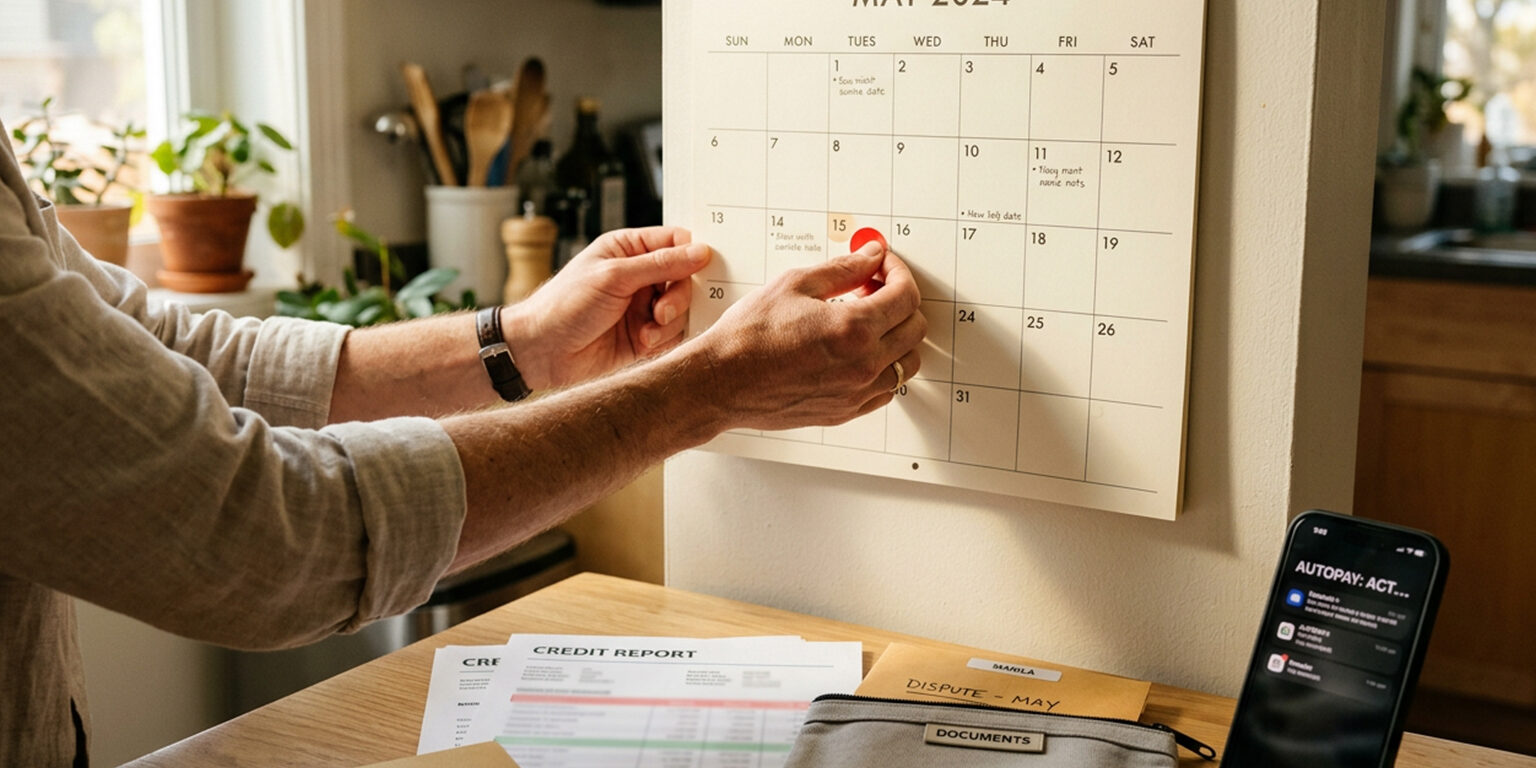
Keeping a healthy credit score doesn’t require dramatic moves. Small, consistent steps each month prevent surprises and build momentum. Treat credit maintenance like basic home upkeep: a little attention goes a long way. The following sections lay out clear, manageable tasks you can repeat regularly.
Review Your Credit Reports
Make a habit of scanning your credit reports for unfamiliar accounts, incorrect balances, or accounts listed that you don’t recognize. Focus on the details that commonly cause score drops: late payments, collection entries, and identity errors. Look for accounts showing higher utilization than you expect and note any sudden changes. Regular checks make problems easier to fix and reduce the risk of long-term damage.
Even a quick monthly read-through can reveal issues early. Flag anything suspicious and plan your next step before a small error becomes a major headache.
Pay Strategically and Lower Balances
On-time payments are the backbone of a good score, but when possible go beyond the minimum payment to trim balances faster. High credit utilization hurts more than a single late payment, so shifting extra dollars to the cards with the highest ratios yields measurable benefits. If timing is tight, make a mid-cycle payment to reduce reported balances. Setting automatic payments for at least the minimum helps avoid accidental late marks.
Prioritize cards with utilization above 30% and aim to reduce them gradually. Small additional payments each month compound into steady score improvements.
Manage New Credit and Account Mix
Opening several new credit lines in a short time can signal risk and lower your average account age. Before applying, consider whether you truly need new credit or if a limit increase on an existing card will suffice. If you do open accounts, keep older accounts active with occasional small purchases and on-time payments to preserve history. A balanced mix of revolving and installment credit can help, but only if you handle both responsibly.
Think long term: weigh the immediate benefit of new credit against its effect on your score trajectory. Small restraint often pays off.
Set Alerts, Dispute Errors, and Track Progress
Use account alerts to catch due dates, large purchases, or balance thresholds as they happen. If you spot inaccuracies on a report, file a dispute promptly and follow up until it’s resolved. Track your score and report snapshots monthly so you can measure the impact of changes and refine your approach. These routines keep you proactive instead of reactive.
Automating reminders and keeping a simple log of changes reduces stress and saves time. Over months, the data you collect helps you make smarter decisions.
Conclusion
Consistent, small actions each month protect and improve your credit more reliably than occasional big moves. Focus on regular report checks, lowering utilization, careful new credit choices, and quick error resolution. Over time those habits translate into stronger scores and more financial options.