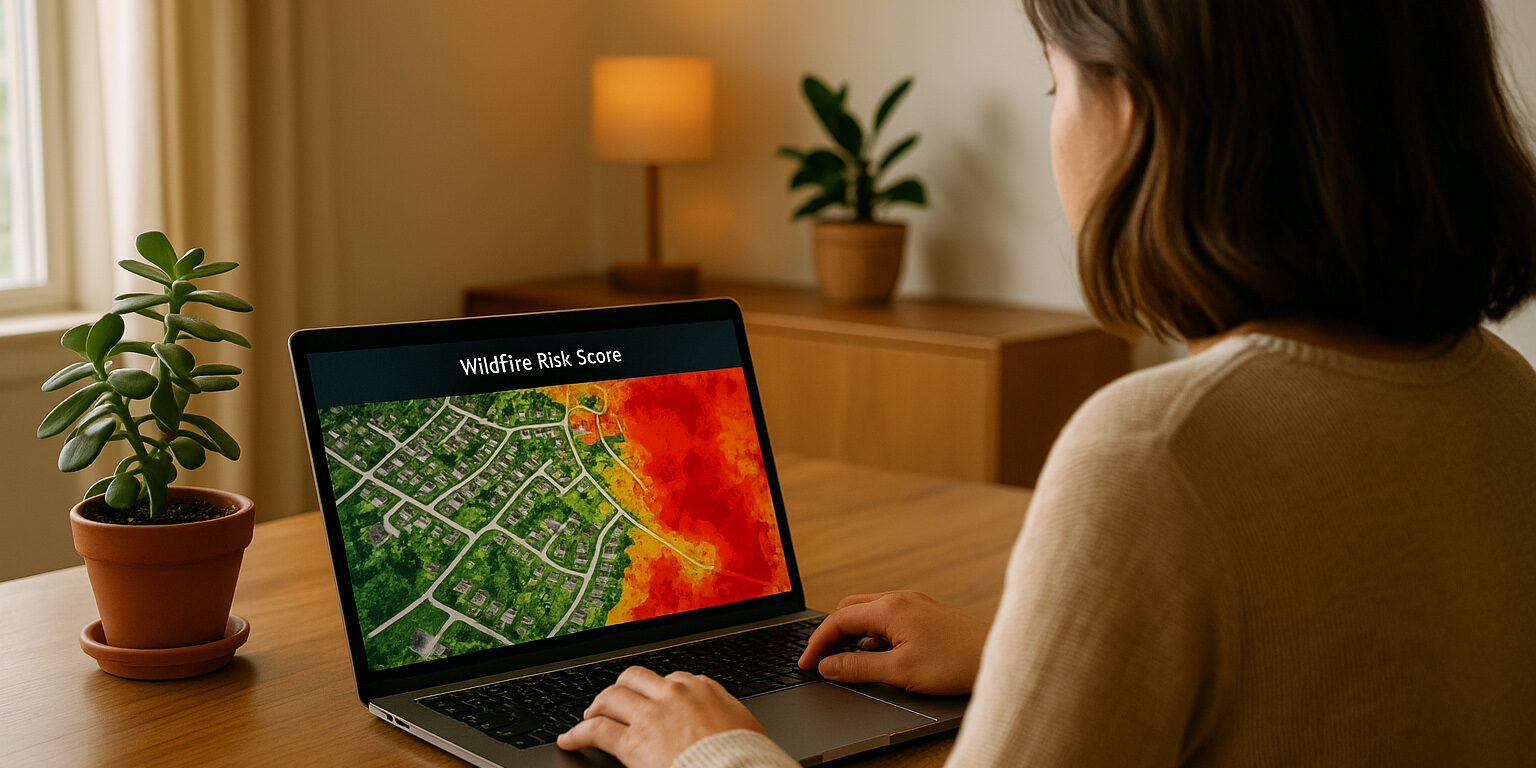
As wildfires grow more frequent and more destructive, insurance companies and homeowners are turning to advanced technology for early warning and risk planning. Wildfire proximity scores—powered by satellite data, climate modeling, and predictive analytics—can estimate how close a home is to future fire paths, sometimes years before danger appears. These scores help insurers price policies more accurately and give homeowners the insight they need to strengthen protection and make smarter decisions about where they live.
Using Real-Time and Historical Climate Data
Wildfire proximity scores rely on massive datasets collected from satellites, weather stations, and environmental sensors. These systems track soil moisture, wind patterns, vegetation density, drought cycles, and temperature changes. AI then analyzes long-term trends to determine how quickly a fire could travel toward a specific area. By layering historical wildfire paths with real-time data, the system identifies zones that are at elevated risk far earlier than traditional methods.
Predicting Risk Years in Advance
Traditional fire maps only show current danger levels, but today’s predictive modeling exposes risks that may not surface for years. AI systems simulate thousands of fire scenarios—varying wind directions, fuel loads, and drought intensities—to forecast how a fire would behave under different conditions. Homeowners gain a clearer understanding of their long-term risk, and insurers can prepare policies that better reflect future exposure rather than past events alone.
Helping Homeowners Act Early
With access to wildfire proximity scores, homeowners can take preventive steps long before fire season arrives. This may include clearing defensible space, upgrading roofing materials, installing ember-resistant vents, or investing in smart monitoring systems. Early knowledge leads to stronger safety planning and reduced property damage.
Transforming into How Insurers Evaluate Home Risk
For insurance providers, wildfire proximity scores improve underwriting accuracy. Instead of relying on broad geographic zones, carriers can assess risk home by home. This precision helps set fairer premiums, encourages mitigation, and reduces surprise losses during catastrophic seasons. In some cases, insurers may offer discounts to homeowners who take proactive measures informed by their risk score.
Supporting Safer Communities Through Data
City planners, emergency responders, and environmental agencies are also using predictive wildfire scores to design safer communities. These insights help determine evacuation routes, prioritize vegetation management, and create fire-adapted policies that protect neighborhoods before fires occur.
Conclusion
Wildfire proximity scores are reshaping how we understand and prepare for fire risk. By combining climate science, satellite technology, and predictive modeling, these tools offer years of foresight—empowering homeowners, insurers, and communities to plan ahead. As wildfire threats continue to grow, this technology provides a critical advantage in protecting property and saving lives.