Credit scores influence borrowing costs, rental decisions, and even some employment checks.
They are a reflection of how you manage credit over time, not a single snapshot of debt.
Small, consistent actions can move a score meaningfully across months rather than days.
This piece explains key components, practical habits, and monitoring approaches to support steady improvement.
What Makes Up Your Credit Score
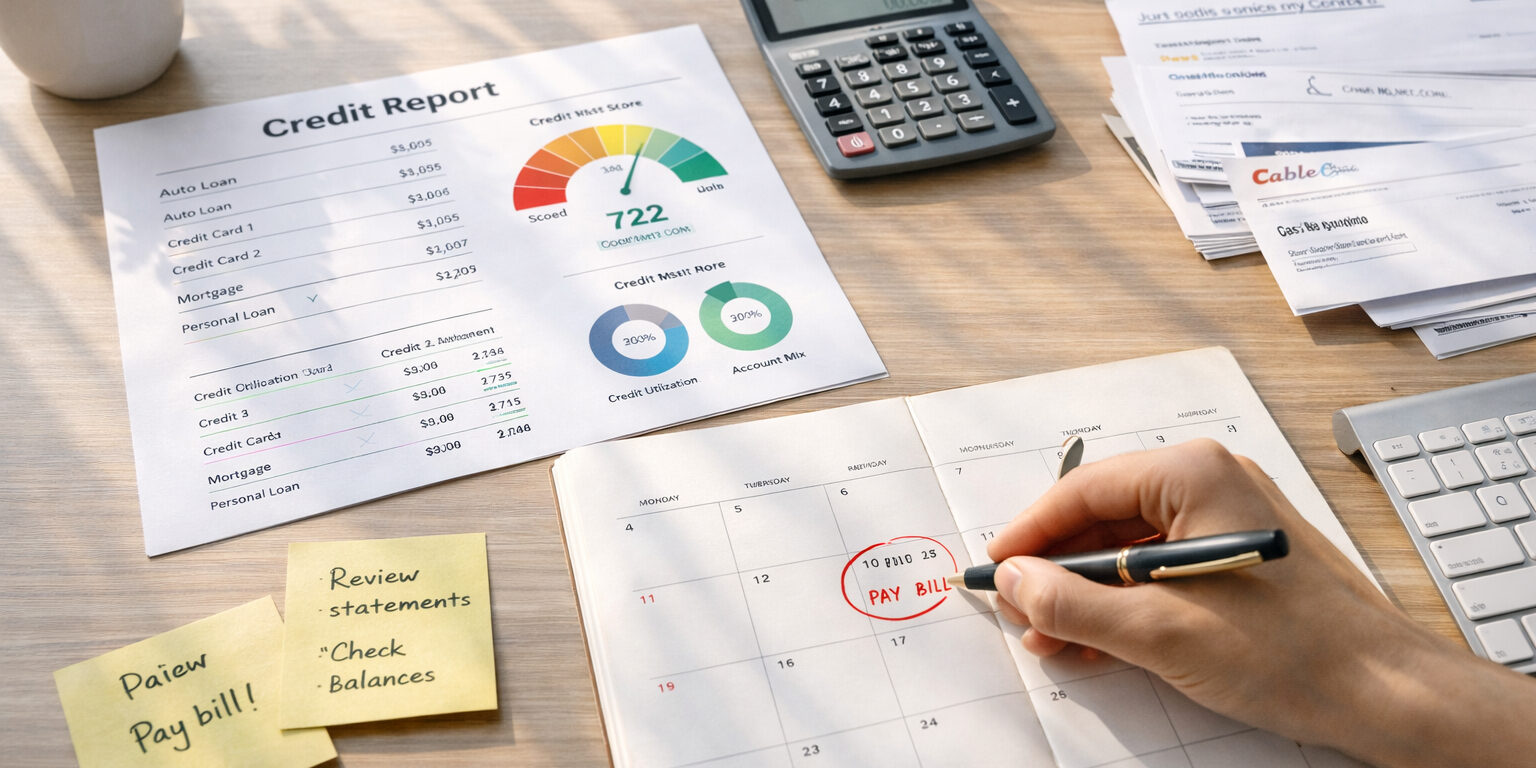
Credit scoring models weigh several factors that together determine a numerical assessment of creditworthiness. Payment history typically carries the most weight, followed by credit utilization, length of credit history, types of credit, and recent inquiries. Each factor interacts: for example, high utilization can offset a long positive payment history and lower the overall score. Understanding which elements affect your score helps you prioritize the most effective actions.
Assessing recent statements and reports clarifies where to focus immediate effort. Start by confirming accounts are reported accurately and that on-time payments are reflected. Errors are common enough that a review can produce quick wins when corrected.
Practical Habits to Improve Score
Adopt a few reliable habits to generate steady score gains rather than chasing short-term fixes. Prioritize on-time payments, keep balances low relative to limits, and avoid opening multiple new accounts in quick succession. Regular, modest changes compound over time and reduce the risk of setbacks from one missed payment or unexpected expense. Consistency matters more than perfection when rebuilding or improving your score.
- Pay at least the minimum by the due date every month.
- Aim to keep utilization under 30%, and lower when possible.
- Consider balances and due dates when planning payments each month.
- Limit new credit applications to reduce hard inquiries.
Implementing these habits creates a foundation for long-term improvement and minimizes volatility. Small adjustments—like splitting payments or requesting higher limits—can reduce utilization quickly without new debt.
Monitoring and Long-Term Maintenance
Regular monitoring helps you catch reporting errors and understand how actions affect the score over time. Use free score updates and review credit reports annually to verify account details and spot inconsistencies. Set calendar reminders for payments and periodically reassess credit mix only when it aligns with broader financial goals. Patience and monitoring together turn short-term progress into durable improvement.
When setbacks occur, focus on correcting the behavior that caused them and allow consistent positive activity to restore scores. Over months and years, reliable patterns of on-time payments and low utilization will produce measurable gains.
Conclusion
Improving a credit score requires clarity, patience, and consistent action.
Concentrate on payment history, utilization, and accurate reporting for the biggest impact.
Small, sustained habits produce meaningful financial flexibility over time.